



I love Jesus, but that doesn’t mean you have to.
In fact, I really get why you might not. Or why you might love Jesus, but are beginning to see the church has not been the safest place for you.
I recognize we live in a world where, in some sects, the Christian church still uses its power to hurt women more often than it chooses to protect and value us, as it does for men:

- At the hands of an intimate partner, over 1 in 3 women have experienced violence and nearly half of women have experienced psychological aggression (National Domestic Violence Hotline).
- Domestic violence is equally as prevalent in Christian households as it is in other religious or secular households. Beliefs of a religious system can often prevent or discourage the victim from leaving abusive relationships or seeking help (Safe Harbor).
- Since 1996, South Carolina frequently makes the top 10 deadliest states for women dying by the hands of men, having been slated as the #1 deadliest state multiple times. Greenville County typically has the highest reported rates of violence in South Carolina (Safe Harbor).
- In a 2018 survey of 1591 people, 1002 people (63%) identified as having been spiritually abused within their Christian community. Over 2 out of 3 of these survivors were female (Oakley & Humphreys).
I get it because I have survived harm inflicted by the church, too.
I worked for a number of years as the executive assistant and project manager for a megachurch, where I obeyed my role to support the deepest inner workings of a narcissistic and misogynist church system. And years later, I still uncover parts of me needing care after the fallout, because the devastation of abuse shrouded in spiritual abuse is massive.
What is spiritual abuse, exactly?
First, let’s define abuse. The question often arises in my office and elsewhere, “what even is abuse?” The prefix “ab” means “away from”, implying abuse is a departure from the proper use of something (or someone). To put this word directly after the word “spiritual” usually turns the conversation uncomfortable.
So here are some of the definitions that capture it well:
- Spiritual abuse is a form of emotional and psychological abuse, characterized by a systematic pattern of coercive and controlling behavior within a religious context (Humphreys, 2018).
- Spiritual abuse is a distortion and exploitation of spiritual authority to manipulate, control, use, or harm others, mostly through shame and fear (Rachel Clinton Chen).
- Spiritual abuse is the mistreatment of a person who is in need of help, support, or greater spiritual empowerment, with the result of weakening, undermining, or decreasing that person’s spiritual empowerment (Johnson & Van Vonderen, 1991).
Some of my favorite books on spiritual abuse, deconstruction, and reconstructing faith:
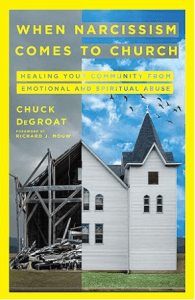
When Narcissism Comes to Church: Healing Your Community From Emotional and Spiritual Abuse (Chuck DeGroat) 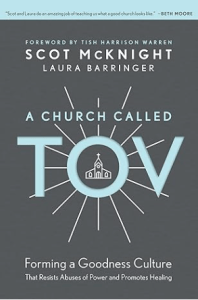
A Church Called Tov: Forming a Goodness Culture That Resists Abuses of Power and Promotes Healing (Scott McKnight, Laura Barringer) 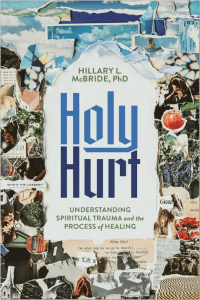
Holy Hurt: Understanding Spiritual Trauma and the Process of Healing (Hillary McBride, PhD) 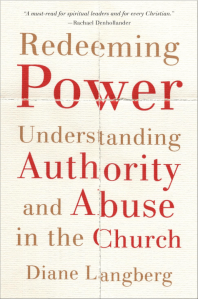
Redeeming Power: Understanding Authority and Abuse in the Church (Diane Langberg, PhD) 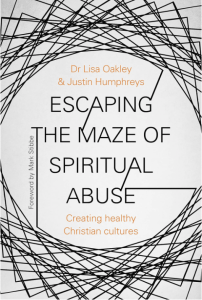
Escaping the Maze of Spiritual Abuse: Creating Healthy Christian Cultures (Dr. Lisa Oakley, Justin Humphreys) 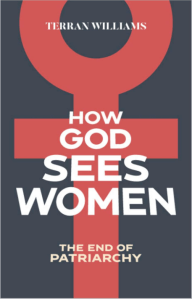
How God Sees Women: The End of Patriarchy (Terran Williams) 
Attached to God: A Practical Guide to Deeper Spiritual Experience (Krispin Mayfield) 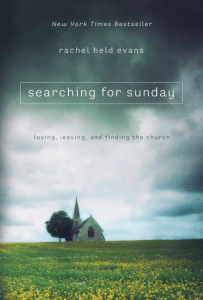
Searching for Sunday: Loving, Leaving, and Finding the Church (Rachel Held Evans) 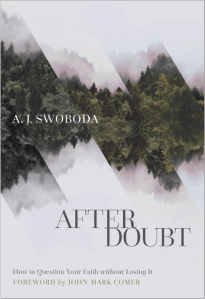
After Doubt: How to Question Your Faith Without Losing It (A. J. Swoboda) 
The Lord is My Courage: Stepping Through the Shadows of Fear Toward the Voice of Love (K. J. Ramsey) 
The Sin of Certainty: Why God Desires Our Trust More Than Our “Correct” Beliefs (Peter Enns) 
Woven: Nurturing a Faith Your Kid Doesn’t Have to Heal From (Meredith Miller)

If you have experienced spiritual abuse, know you’re not alone.
And I’m here for you, regardless of your relationship with God now.
 Likewise Mental Health Care